
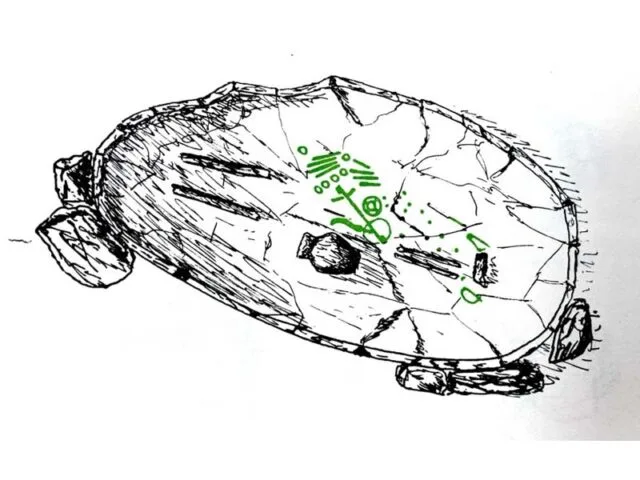
by Barbara Crescimanno The necropolis of Molino della Badia – Madonna del Piano (Grammichele, Catania), dating back to a period between the end of the Bronze Age and the beginning of the Sicilian Iron Age (11th-9th century BC), differ from other Sicilian necropolises of the same facies: Bernabò-Brea defines them as one of the most unique complexes…
See more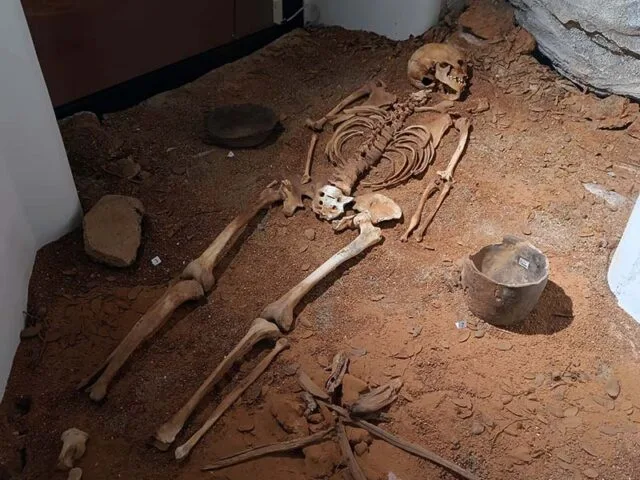
by Arianna Carta Spring 1961. In the Lanaittu Valley, beneath Mount Gutturgios, a group of speleologists from the Nuorese Caves Group climbs a rock face to a small cave in the Dorgali area. At the end of a narrow tunnel, they find what they weren't looking for: a nearly complete human skeleton…
See more
There are things that, precisely because they've existed for a long time, end up seeming natural to us; patriarchy is one of them. Patriarchy is documented in many historical societies. We find it in laws, family structures, the transmission of property, religions, and the organization of power. For centuries, it has been justified...
See more
There's a pamphlet, recently published in France, that deserves to be read twice. The first time to understand what it says. The second time to understand how it says it, and it's in that second reading that, in my opinion, lies the most interesting question. The title says it all: L'imposture…
See more
by Alessandra de Nardis To restore comes from the Latin restituĕre, composed of: re-, “back”, “again”, “to the original point” and statuĕre, “to place”, “to place”, “to put in a state”. It therefore literally means “to put back in its place”, “to bring back to a previous state”, “to give back what had been taken away or lost[1]. In its core therefore, “to restore” implies a…
See more
Introduction by Elvira Visciola and Alessandra De Nardis Marija Gimbutas (1921–1994) was one of the most original and unconventional voices in twentieth-century archaeology. Trained as an archaeologist and linguist, she was able to combine scientific rigor and an interdisciplinary vision, proposing a radically new interpretation of prehistoric European civilizations. At the heart of her work is…
See more
by Alessandra de Nardis Not long ago, it was still taught that Homo Sapiens, then nicknamed Cro-Magnon[1], had arrived in Europe about 40.000 years ago and that he had gradually replaced Neanderthal man, who finally became extinct 35.000-30.000 years ago. We were still firmly attached to the idea that we, Sapiens,…
See more
by Alessandra de Nardis and Elvira Visciola In 2020, a short article was published on the pages of Preistoria in Italia, "A necklace of deer teeth from 16.000 years ago", on a particular object found in a burial discovered in 1934 in southern France. western, in Saint-Germain-La-Rivière, dated to the Middle Magdalenian,…
See more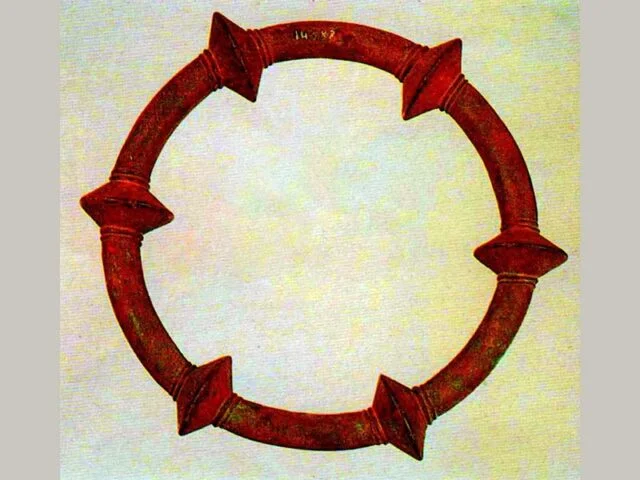
by Francesca Principi The large knotted rings are one of the most characteristic symbols of the Piceno culture even though they remain, to this day, finds whose true meaning remains mostly obscure. To understand the cultural context in which these objects were created, it is of fundamental importance to make a premise on identity…
See more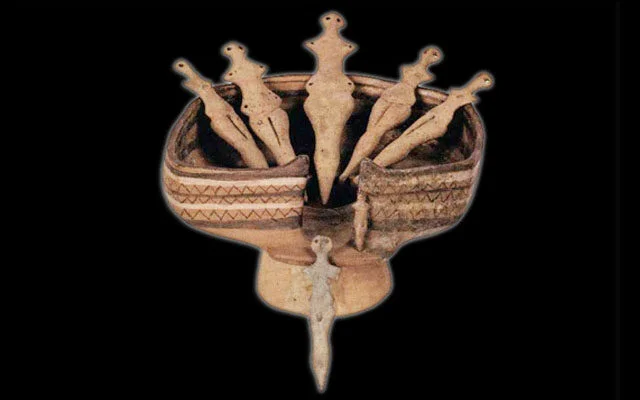
Autochthonous civilizations lit up along the coasts of the Danube, with strong signals of equal and community culture. A tribute to Marija Gimbutas, visionary archaeologist. by Harald Haarmann and Mariagrazia Pelaia Discovering Ancient Europe. In the preface to her fundamental work entitled The Civilization of the Goddess (1991; transl. It .: La civilization…
See more